Light Mode
Operational Exposure Reports from the MindML Sovereign Kinetic Engine (v2.0)

Field Dossiers: Relational Risk Investigations

Executive Briefing & Page Gateway

Enterprise AI investments routinely stumble at the boundary between language generation and operational reality. Standard Large Language Models (LLMs) and vector-based Retrieval-Augmented Generation (RAG) are optimized for text summarization, drafting, and probabilistic search; however, high-stakes infrastructure does not operate on statistical probabilities. In power grids, chemical clusters, cross-border cold chains, hyperscale data halls, and private capital formations, every operational adjustment is bound to an active web of legal covenants, statutory safety perimeters, and physical constraints.

When commercial teams grant an isolated tariff concession, waive an SLA penalty, or adjust power curtailment, they are rarely executing an isolated transaction. These actions propagate across contractual and physical networks, silently activating Most Favored Nation (MFN) price-matching covenants, breaching environmental exclusion buffers, or invalidating regulated fund allocations.

The investigative dossiers below document real-world relational cascades across critical industry sectors. Each dossier contrasts the unhedged liabilities overlooked by traditional conversational AI with the deterministic mathematical resolution, deal optimization, and Merkle-audited governance enforced by the MindML Sovereign Kinetic Engine.
Sectoral Filter & Archive Navigation

  • Sector Verticals: All Sectors | Industrial Energy & Chemicals (§4.1) | Sovereign Cloud & IT (§4.2) | Pharma Cold-Chain (§4.3) | High-Voltage Grids (§4.7) | Private Capital & Funds (§4.8–4.9) | Regulated Networks & Aviation (§4.4, §4.10)
  • System Telemetry: Deterministic Graph Traversal: Sub-1ms | Sovereign Silicon Execution: Air-Gapped / Zero Cloud Egress | State Integrity: SHA-256 Merkle Chain Sealed

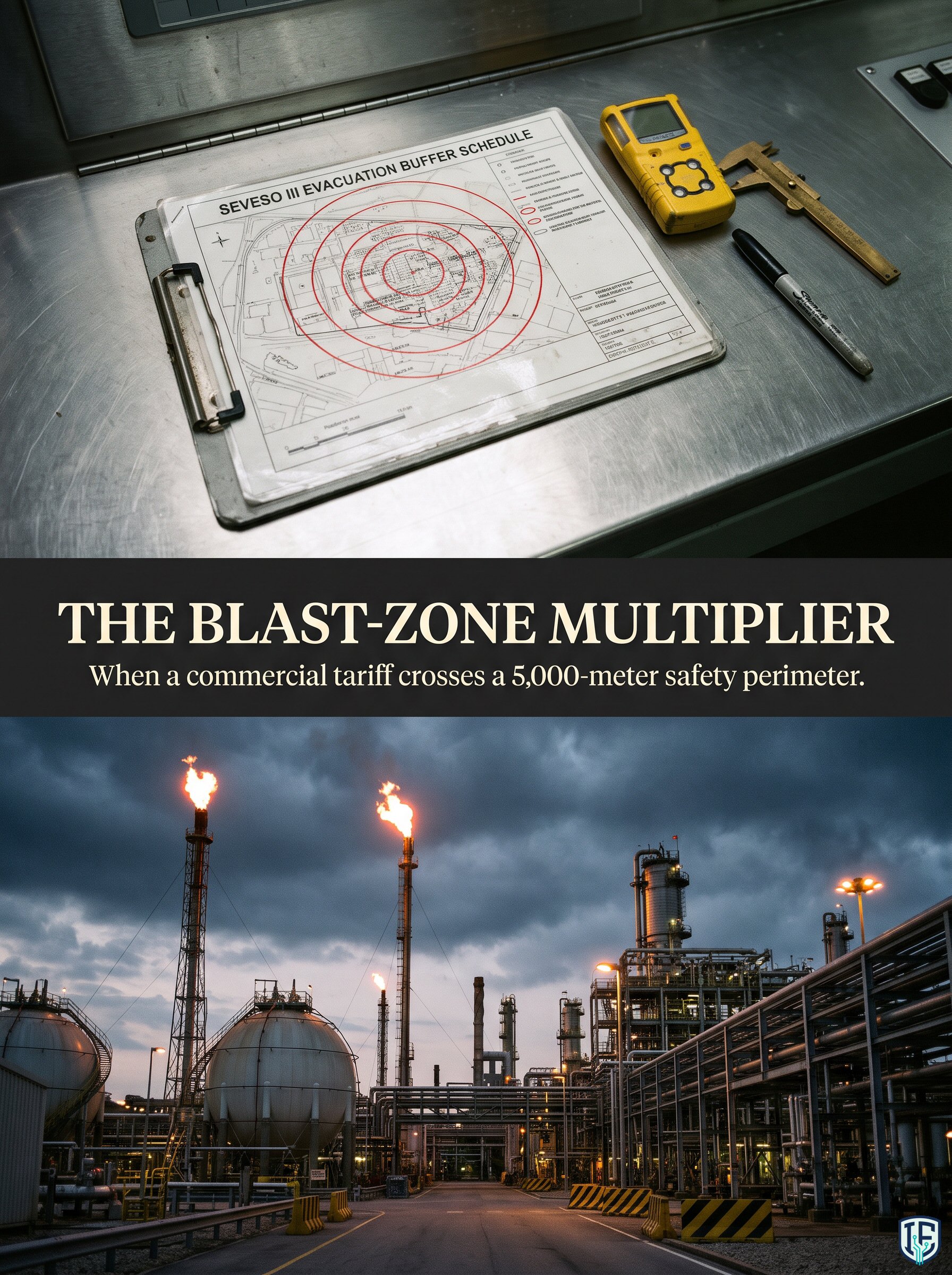
Dossier 01: The Blast-Zone Multiplier

Power Grids & Seveso III Chemical Clusters

Seveso III Evacuation Buffer Schedule

Forensic Telemetry & Incident Profile

  • Governing Entity: AntwerpEnergyHub ($1,000,000,000 Base Grid Allocation at 2.00% base tariff)
  • Contract Grounding: Energy_Grid_Charter.pdf, Article 1, Clause-1.4 (Antwerp Industrial Cluster)
  • Target Transaction: Proposed 20 bps tariff reduction for Port Terminal Operator (PAR-9A21C401) on a $20M contract ($40,000/yr direct concession)
  • Counterparties in Exposure Radius:
    - BASF Antwerp Chemical Plant: $140M commitment | 5,000m mandatory evacuation buffer | Belgian Jurisdiction (BE)
    - RWE Ruhr Power Station: $110M commitment | 3,500m mandatory evacuation buffer | German Jurisdiction (DE)
  • Parity Qualification Rule: Most Favored Nation (MFN) Tariff Parity triggered for any counterparty with commitment ≄ $50M when target commitment ≀ partner commitment
  • Primary Violation: Multi-counterparty MFN covenant activation compounded by Seveso III statutory hazard buffer intersection
  • Default Escalation Level: TIER_3_INVESTMENT_COMMITTEE_AND_GENERAL_COUNSEL (10-day notice SLA)

The Operational Incident

To alleviate marine container terminal congestion, a commercial operations desk at the Antwerp Energy Hub prepares an administrative tariff relief package of 20 basis points (0.20%) for Port Terminal Operator on its $20,000,000 power allocation. On an isolated deal sheet, the cost of the concession is calculated as a manageable $40,000 annual commercial courtesy.

The Relational Reality

The Antwerp Energy Hub does not operate in isolation. Under Clause 1.4 of the hub charter, major industrial anchor tenants hold legally binding MFN tariff parity rights designed to guarantee energy rate equity across the industrial basin. Because Port Terminal Operator commits only $20M, granting this preferential rate immediately entitles both BASF Antwerp ($140M volume) and RWE Ruhr ($110M volume) to demand identical tariff reductions across their entire asset footprint.

Concurrently, both anchor facilities operate high-hazard chemical processing units governed by European Seveso III directives, maintaining statutory circular evacuation buffer zones of 5,000 meters and 3,500 meters respectively. Adjusting energy allocations without validating spatial infrastructure parameters risks stimulating throughput shifts that encroach on statutory hazard containment zones.


The Unhedged Cascade

  • Annual Ripple-Effect Drag:
    Δcascade = -($140M + $110M) × (20 bps × 0.0001) = -$500,000/year
    - BASF Antwerp Share (56.0%): -$280,000/year
    - RWE Ruhr Power Share (44.0%): -$220,000/year
  • OmniPredict 5-Year Cumulative Risk Exposure:
    5-Year Drag = -$500,000 × 0.85 × 5 = -$2,125,000
  • Governance Barrier: Because total annual drag (-$500,000) breaches the 1.6 × $250,000 delegated authority limit, execution freezes under mandatory Tier 3 C-Suite and General Counsel review.

Kinetic Engine Resolution

  1. Deterministic B-Tree Parity Traversal: In < 1 ms, the engine traverses the encrypted entity graph, identifying 100% of connected MFN covenants without vector approximation.
  2. Spatial GeoAnalyst Validation: Maps physical terminal coordinates against active Seveso III GIS polygon layers, confirming 5,000m buffer intersections.
  3. Prescriptive Deal Optimization (CF-02): Automatically solves for the Pareto-optimal concession cap that keeps financial leakage under the discretionary $250,000 threshold (9.9 bps). Restructuring the tariff saves the hub +$252,500/year and instantly clears the agreement under Tier 1 Delegated Authority.
  4. Policy Safety Zone Exemption: Toggling the Emergency Safety Carve-Out invokes Section 1.4B; because both plants reside inside regulated hazard perimeters, external ripple drag drops to $0.
  5. Merkle Ledger Integrity: Stages the action under Block #1042 in PENDING state with an authentic SHA-256 hash digest, guaranteeing full 1-click atomic rollback.
Direct Verification Action: Load in Lab

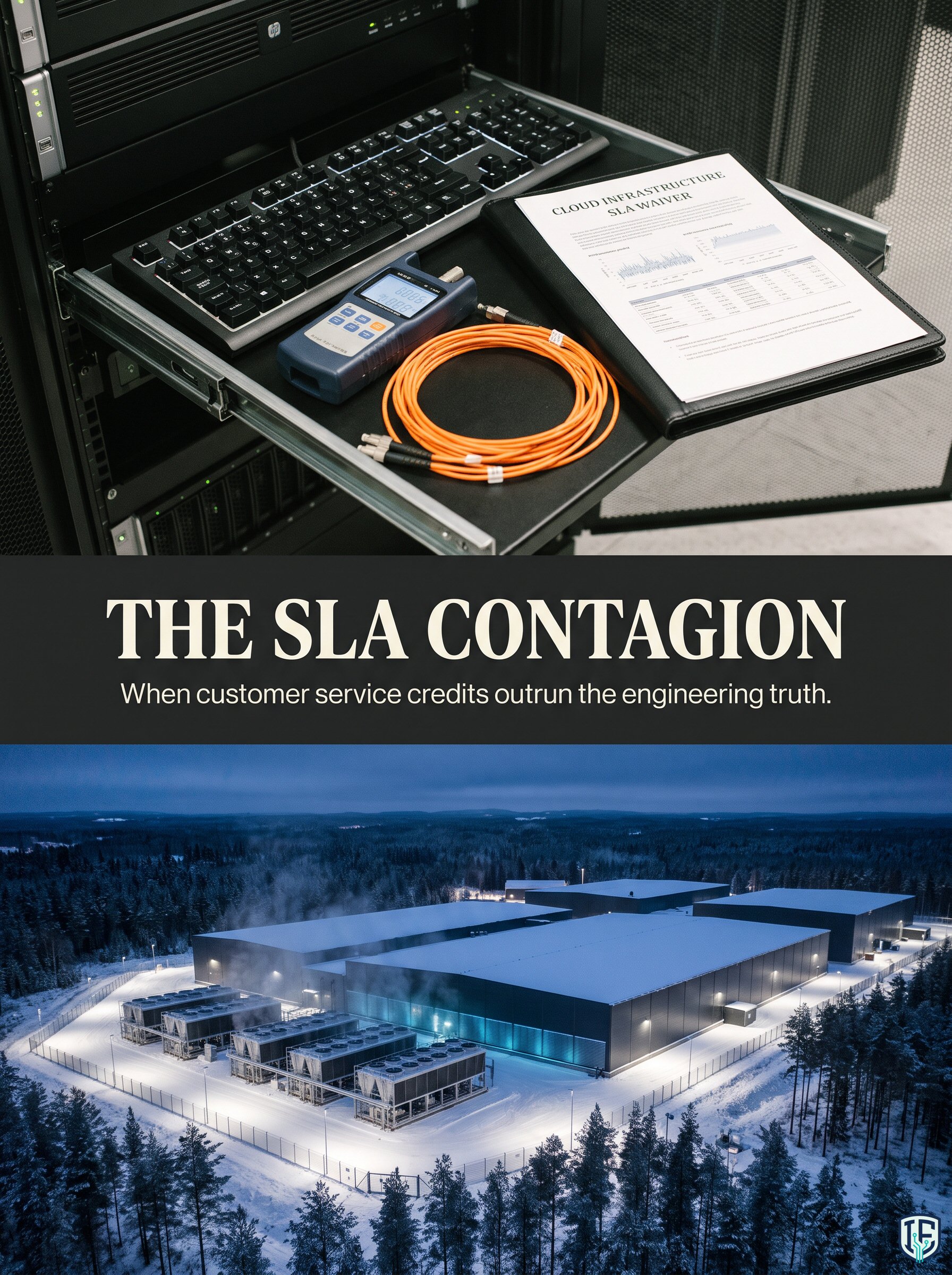
Dossier 02: The SLA Contagion

Sovereign Cloud & IT Infrastructure

Server rack console tray and fiber cables

Forensic Telemetry & Incident Profile

  • Governing Entity: SovereignCloudCluster ($600,000,000 Compute Allocation Capacity)
  • Contract Grounding: Sovereign_Cloud_Infrastructure_Master_Charter.pdf, Schedule 4, Clause-4.2
  • Target Transaction: Proposed 25 bps SLA service fee credit for FinTech Sandbox Tenant (PAR-3310F2) on a $10M compute commitment ($25,000 direct credit) following latency spikes
  • Counterparties in Exposure Radius:
    - Siemens Digital Cloud: $120M compute commitment | Priority Availability SLA
    - SAP Sovereign Node: $80M compute commitment | Sovereign Data Isolation SLA
  • Parity Qualification Rule: Cloud SLA Fee Parity triggered for any tenant with commitment ≄ $50M when target commitment ≀ tenant commitment
  • Primary Violation: Commercial rebate granted without hardware telemetry correlation, activating anchor infrastructure-wide fee parity
  • Default Escalation Level: TIER_3_EXECUTIVE_INFRASTRUCTURE_BOARD (10-day notice SLA)

The Operational Incident

Following transient packet loss and latency spikes across a multi-tenant compute pod, enterprise customer support attempts to soothe an onboarded FinTech sandbox customer by issuing a 25 basis point (0.25%) SLA performance fee credit on their $10,000,000 contract. The support desk logs the $25,000 adjustment as a standard customer-retention courtesy.

The Relational Reality

The compute cluster hosts mission-critical enterprise workloads under long-term sovereign service commitments. Under Schedule 4, both Siemens Digital Cloud ($120M) and SAP Sovereign Node ($80M) hold strict SLA Parity covenants: if the infrastructure operator concedes a performance fee rebate to any client on the cluster, that exact concession percentage must be extended to anchor tenants unless the failure is mathematically proven to be isolated to sandbox-specific virtualization layers.

Furthermore, commercial support issued the concession without inspecting hardware telemetry. Local server logs indicate that the latency was caused by systemic hardware bottlenecking—specifically high ProcessingTime (45ms) and SystemDowntime (14 min) across shared backplane switches—rather than a localized account glitch.


The Unhedged Cascade

  • Annual Ripple-Effect Drag:
    Δcascade = -($120M + $80M) × (25 bps × 0.0001) = -$500,000/year
  • Systemic Engineering Exposure: Issuing the credit admits legal SLA fault across the entire compute pod, exposing the provider to cumulative multi-tenant liquidated damage claims exceeding $2,000,000 across a 5-year cycle.
  • Governance Barrier: Escalates directly to Tier 3 Executive Infrastructure Board, freezing operational approvals across the data center division.

Kinetic Engine Resolution

  1. Automated Root Cause Telemetry Correlation: The RootCauseAnalysisAgent ingests system telemetry CSV logs, cross-referencing latency tickets with switch backplane metrics to isolate systemic cluster degradation from tenant-level errors.
  2. Prescriptive Deal Optimization (CF-02): Solves for the maximum allowable concession that remains within Tier 1 Discretionary Delegated Authority (2.47 bps). Capping the credit limits aggregate exposure to -$49,500/year.
  3. Engineering Truth Gating: Flags that the underlying telemetry bottleneck must be resolved by data center engineering before any commercial credit is signed, preventing premature legal admissions of infrastructure breach.
  4. Append-Only Merkle Ledger Gating: Requires dual cryptographic sign-off from the Infrastructure Lead and Corporate Counsel, logging the state transition with SHA-256 audit hashing and zero cloud telemetry leakage.
Direct Verification Action: Load in Lab

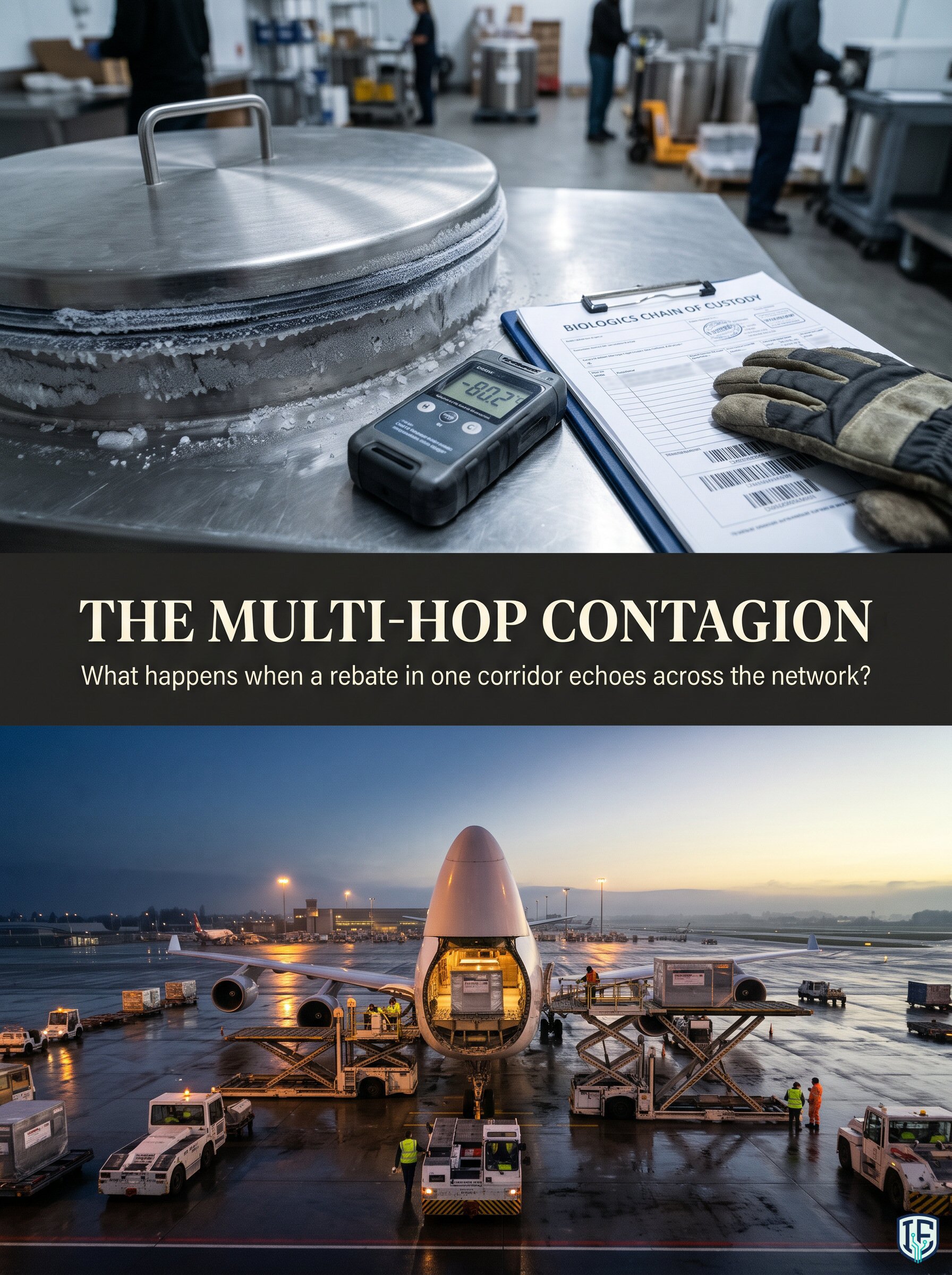
Dossier 03: The Multi-Hop Contagion

Biologics Supply Chain & Linked Logistics Corridors

Cryogenic transport vat and logistics manifest

Forensic Telemetry & Incident Profile

  • Governing Primary Entity: EuroLogisticsHub ($900,000,000 Pharma Handling Volume)
  • Connected Secondary Entity: FrankfurtColdCorridor ($400,000,000 Volume), linked via LINKED_LOGISTICS_CORRIDOR edge
  • Contract Grounding: Pharma_ColdChain_Master_Agreement.pdf, Articles 1 & 2, Clause-2.1
  • Target Transaction: Proposed 30 bps handling tariff discount for Regional Express Carrier (PAR-7C11E309) on a $15M commitment ($45,000/yr direct concession)
  • Counterparties in Exposure Radius:
    - Sanofi Biologics Freight: $160M volume | French Jurisdiction (FR)
    - Bayer Pharma Distribution: $90M volume | German Jurisdiction (DE)
    - Roche Diagnostics Logistics (Linked Corridor): $70M volume | German Jurisdiction (DE)
  • Parity Qualification Rule: Handling Fee Parity triggered across primary hub counterparties, with transitive spillover into linked operating corridors holding master reciprocal parity rights.
  • Primary Violation: Multi-hop cross-border tariff contagion leaking into secondary logistics corridors.

The Operational Incident

To secure dedicated reefer container feeder capacity during an unexpected cold-chain logistics bottleneck, regional freight directors at EuroLogisticsHub offer Regional Express Carrier a 30 basis point (0.30%) handling tariff concession on a $15,000,000 annual agreement. The commercial team treats the $45,000 concession as an isolated local route incentive.

The Relational Reality

Cold-chain pharmaceutical distribution relies on interconnected freight corridors. EuroLogisticsHub operates under a unified master operating charter with anchor shippers Sanofi ($160M) and Bayer ($90M), both of whom hold MFN fee parity rights.

Critically, under Clause 2.1 of the master agreement, EuroLogisticsHub is bound to FrankfurtColdCorridor via a reciprocal logistics corridor edge. Under this cross-corridor framework, anchor shippers in Frankfurt—specifically Roche Diagnostics ($70M volume)—maintain cross-corridor parity covenants ensuring rate parity across connected European hubs. An unhedged tariff modification granted in Belgium cascades across borders into Germany.


The Unhedged Cascade

  • Primary Hub Drag (Hop 0):
    ΔHubA = -($160M + $90M) × (30 bps × 0.0001) = -$750,000/year
  • Transitive Linked Corridor Drag (Hop 1):
    ΔHubB = -$70M × (30 bps × 0.0001) = -$210,000/year
  • Total Multi-Hop Exposure: -$960,000/year
  • OmniPredict 5-Year Cumulative Risk Exposure: Over $3,180,000 across connected corridors.

Kinetic Engine Resolution

  1. Transitive BFS Graph Discovery: The engine’s graph traversal automatically navigates outward from EuroLogisticsHub along the LINKED_LOGISTICS_CORRIDOR edge, discovering the secondary exposure on Roche Diagnostics in < 1 ms.
  2. Prescriptive Deal Optimization (CF-02): Recalculates the optimal concession across primary hub counterparties to stay within the $250,000 limit (9.9 bps). Capping the discount saves +$502,500/year and unlocks Tier 1 Fast-Track Approval.
  3. Contractual Ring-Fencing Policy: If the full 30 bps concession is mandatory, toggling Ring-Fence Primary Hub invokes contractual clause severability, legally isolating the primary facility and cutting the Frankfurt contagion link. Frankfurt spillover drops from -$210,000 to $0.
  4. Volume Step-Up Alternative (CF-03): Proposes stepping up the regional carrier’s volume commitment to $95M. Because $95M exceeds Bayer’s $90M volume, Bayer is legally bypassed, instantly eliminating $270,000 in fee drag.
Direct Verification Action: Load in Lab

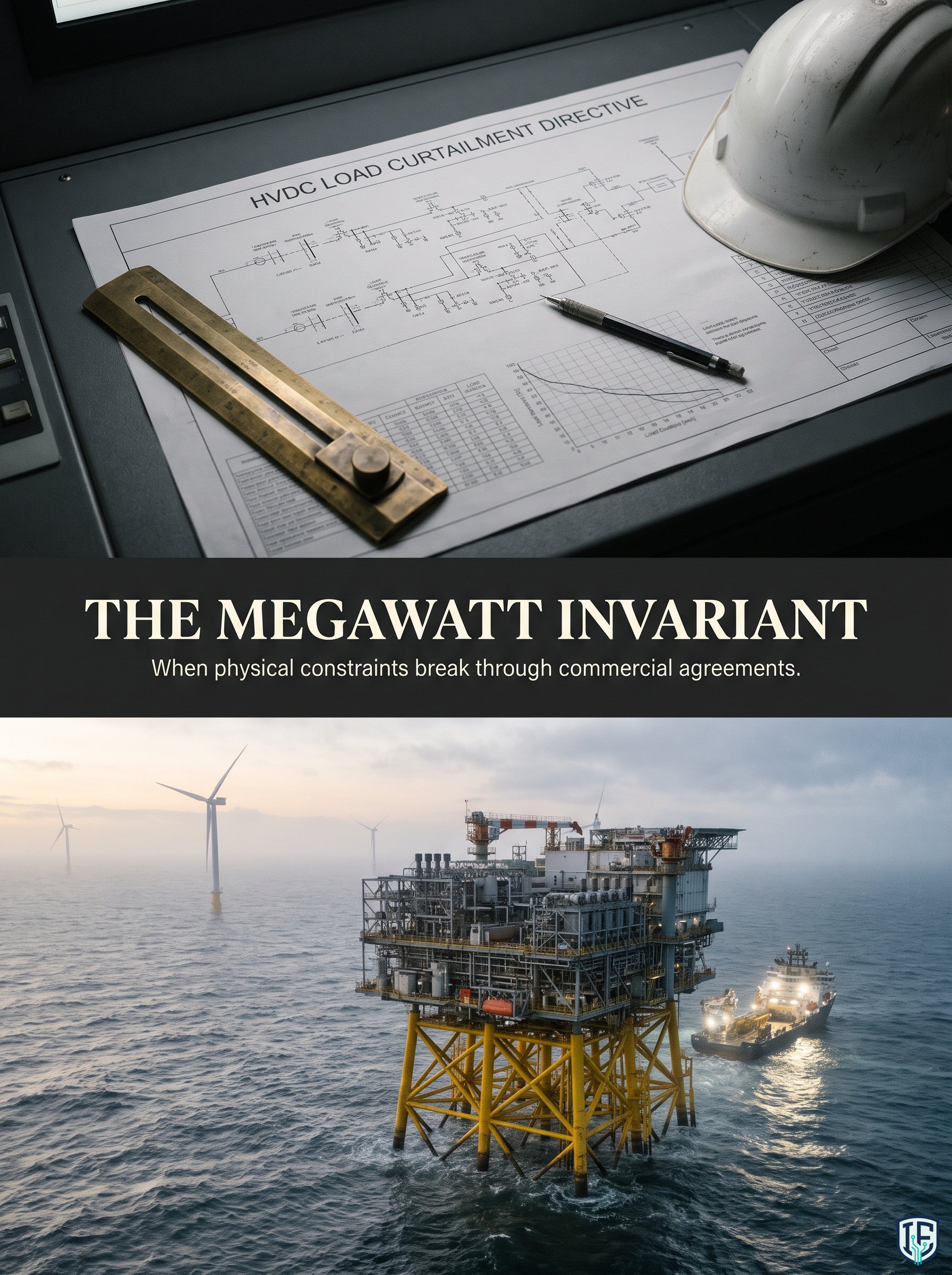
Dossier 04: The Megawatt Invariant

High-Voltage Electrical Grids & Non-Currency Governance

HVDC Load Curtailment Directive and maritime grid console

Forensic Telemetry & Incident Profile

  • Governing Entity: NorthSeaHVDCSubstation (500 MW Physical Transmission Throughput Capacity)
  • Governing Base Unit: Megawatts (MW) — Non-currency physical dimension
  • Contract Grounding: HVDC_Substation_Operating_Charter.pdf, Article 1, Clause-1.1
  • Target Transaction: Proposed 50 MW power curtailment exemption for Backup Peaker Unit (PAR-5E10C221) on a 25 MW base capacity commitment during peak load stress
  • Generators in Exposure Radius:
    - Offshore Wind Array Alpha: 200 MW Base Generation | Bus A Connection
    - Hydrogen Electrolyzer Plant: 150 MW Industrial Load Sink | Bus B Connection
  • Parity Qualification Rule: Physical Load_Parity_SLA enforced for all grid participants ≄ 100 MW when target generation ≀ partner generation
  • Primary Violation: Physical load-shedding exemption triggering legal parity across 350 MW of generation, creating a 28.57% capacity shock exceeding thermal reserve limits

The Operational Incident

During an extreme offshore wind generation peak combined with high transmission line congestion, grid dispatchers consider granting Backup Peaker Unit a 50 Megawatt curtailment exemption to guarantee localized thermal stabilization. To a standard language model or financial system, "50" looks like an inconsequential number compared to standard multi-million-dollar financial covenants.

The Relational Reality

Physical power grids are governed by Kirchhoff’s laws and transmission thermal ratings, not currency. Under Substation Charter Clause 1.1, connected generators Offshore Wind Array Alpha (200 MW) and Hydrogen Electrolyzer Plant (150 MW) hold binding Load_Parity_SLA covenants. Under grid parity rules, granting an uncurtailed power injection allowance to one participant automatically entitles both anchor renewable facilities to claim an identical 50 MW curtailment exemption during congestion windows.


The Unhedged Cascade

  • Physical Load Contagion:
    Δload = 2 anchor generators × 50 MW = 100 MW of uncurtailed load
  • Relative Materiality Shock:
    Relative Impact = 100 MW / 350 MW (Base Connected Capacity) = 28.57%
  • Systemic Engineering Exposure: The substation’s certified safe dispatch reserve ceiling is 35 MW. Injecting 100 MW of uncurtailed power breaches thermal tolerance by +65 MW, creating immediate grid frequency instability and thermal trip risk across the North Sea interconnector.
  • Governance Barrier: Relative materiality ≄ 10% triggers mandatory escalation to the Tier 3 Chief Grid Dispatch Board.

Kinetic Engine Resolution

  1. 11-Dimensional Quantitative Parsing: The engine natively parses non-currency physical dimensions (MW, GWh, bar, mÂł/h), stripping financial currency assumptions and enforcing physical conservation laws.
  2. Relative Materiality Escalation: Automatically calculates the 28.57% relative capacity shift, routing the request away from commercial desks directly to the Chief Grid Dispatch Board.
  3. Prescriptive Deal Optimization (CF-02): Solves for the maximum physical exemption that respects the 35 MW safe dispatch headroom limit (17.3 MW). Capping the peaker exemption at 17.3 MW holds total network load displacement to 34.6 MW, preserving 65.4 MW of reserve headroom and unlocking Tier 1 Immediate Dispatch by the Shift Grid Controller.
  4. Peak-Reserve Grid Reconfiguration Mode: If the full 50 MW exemption is critical, dispatchers can simulate switching the substation to Peak-Reserve Mode. This simulates closing bus couplers and activating dynamic line cooling, expanding thermal limits to 122.5 MW and clearing the 50 MW request safely.
Direct Verification Action: Load in Lab

Dossier 05: The Precedence Cascade

Private Capital, Fund Formations & Judicial Vacaturs

Law library table with compendium of amendments

Forensic Telemetry & Incident Profile

  • Governing Entities: ApexGlobalBuyoutVIII ($2,000,000,000 Fund Allocation) & SovereignInfraFundIX ($1,200,000,000 Infrastructure Fund Allocation)
  • Contract Grounding: Apex_Buyout_SideLetter_Compendium.pdf & Regulatory_Compliance_Charter.pdf, Clause-6.1
  • Target Transaction: Proposed 25 bps management fee waiver for Municipal Co-Investor (PAR-5510M0) on a $20M capital commitment ($50,000/yr direct fee concession)
  • Institutional Limited Partners (LPs) in Scope:
    - Allianz Global Infrastructure: $150M capital commitment | Side letter parity covenant anchored to SEC Mandate § 1332
    - CDPQ Quebec Pension: $110M capital commitment | Side letter parity covenant anchored to SEC Mandate § 1332
  • Parity Qualification Rule: Institutional MFN Fee Parity held by investors committing ≄ $50M, explicitly governed by statutory administrative rules
  • Primary Violation: Unhedged fee parity cascade under active regulations, followed by portfolio-wide clause deactivation following judicial vacatur

The Operational Incident

During the final closing phase of an infrastructure co-investment vehicle, fund formation partners propose offering Municipal Co-Investor a 25 basis point (0.25%) management fee concession on its $20,000,000 commitment to secure anchor municipal participation. The sponsor calculates the fee break as a $50,000 annual margin concession.

The Relational Reality

Institutional fund governance operates through hierarchical side letter compendiums and statutory mandates. Under baseline conditions, institutional anchor LPs Allianz Global ($150M) and CDPQ Quebec Pension ($110M) hold active MFN fee parity side letters. Granting a 25 bps fee discount to a $20M investor automatically triggers fee matching across both institutional giants ($260M aggregate commitment).

Critically, these side letters derive their legal authority directly (DERIVES_FROM) from statutory administrative transparency standards (such as SEC Mandate § 1332). When an administrative or appellate court strikes down or vacates that governing regulation (e.g., Supreme Court Ruling 598 U.S. 44, AuthorityRank = 100 overrules AuthorityRank = 80), the legal lineage of every dependent covenant across the portfolio shifts instantly.


The Unhedged Cascade

  • Baseline Pre-Ruling Cascade Drag:
    Δcascade = -($150M + $110M) × (25 bps × 0.0001) = -$650,000/year
  • 5-Year Capital Erosion: Over $2,760,000 in unhedged fee revenue leakage.
  • Governance Barrier: Escalates to Tier 3 Risk and Governance Committee, requiring Managing Partner, General Counsel, and LP Advisory Committee intervention.

Kinetic Engine Resolution

  1. Normative Precedence DAG Traversal: The engine structures contractual side letters, amendments, and statutory authorities as an active precedence graph with OVERRULES and DERIVES_FROM relational edges.
  2. Prescriptive Deal Optimization (CF-02): Under pre-ruling conditions, the optimizer calculates the exact fee break that keeps revenue leakage under the $250,000 limit (9.51 bps). Restructuring to 9.51 bps limits total annual drag to -$247,260/year, saving +$402,740/year.
  3. Automated Regulatory Vacatur Scan: When Apply Supreme Court Vacatur Ruling is toggled, the engine immediately scans the $260M portfolio. Because the underlying federal rule is vacated, all downstream contract covenants dependent on that statute are automatically deactivated. External ripple drag collapses to $0.
  4. Amendment Lineage Tracking: In successor fund scenarios, the engine seamlessly handles Round-2 side letter amendments that raise qualification thresholds from $50M to $150M, automatically excluding sub-$150M funds while maintaining mathematical precision on surviving covenants.
Direct Verification Action: Load in Lab

Dossier 06: The Safe-Harbor Component

Regulated Networks, Aerospace & Emergency Directives

Airworthiness directive and exception waiver on workbench

Forensic Telemetry & Incident Profile

  • Governing Entities: EuroAirworthinessFleet & EuroDroneConsortium ($1,500,000,000 Program Volume)
  • Contract Grounding: EuroDrone_Consortium_Charter.pdf, Section 4.2 & EASA_Emergency_Airworthiness_Directive.pdf, Article 3
  • Target Transaction: Proposed 20 bps maintenance tariff reduction for MedEvac Humanitarian Flight Wing (PAR-4412E8) on a $15M operational commitment ($30,000/yr direct concession)
  • Prime Industry Partners in Scope:
    - Airbus Defense Systems: $300M program commitment | Toulouse Restricted Zone Buffer
    - Thales Avionics Division: $200M program commitment | Mandatory Flight Systems Security Audit Compliant
  • Parity Qualification Rule: Standard Prime Contractor Royalty / Maintenance Parity triggered for any partner ≄ $100M
  • Primary Violation / Conflict: Apparent MFN parity breach on prime maintenance tariffs versus statutory humanitarian emergency safe-harbor carve-outs (EXCEPTION_TO)

The Operational Incident

To ensure rapid availability of life-saving aeromedical transport during a regional crisis, operations directors grant a 20 basis point (0.20%) maintenance and tooling concession to MedEvac Humanitarian Wing. Standard administrative protocols immediately halt the request, warning that granting preferential terms to any fleet operator triggers Most Favored Nation parity clauses across prime industrial contractors Airbus Defense ($300M) and Thales Avionics ($200M).

The Relational Reality

High-stakes operational networks frequently contain deliberate legal and regulatory safety valves. While commercial charters enforce strict rate parity to protect prime contractor investments, statutory aviation and healthcare directives provide explicit conditional safe-harbor carve-outs (EXCEPTION_TO). Under EASA Article 3, non-profit emergency life-safety operations are legally insulated from commercial parity triggers.

When organizations rely on clumsy manual legal reviews, fear of triggering millions in MFN liabilities paralyzes operations, trapping urgent humanitarian decisions in weeks of bureaucratic committee meetings. Conversely, deploying unconstrained generative AI tools risks drafting unauthorized waivers that accidentally breach commercial contracts without verifying statutory compliance.


The Unhedged Cascade

  • Potential Prime Contractor Drag (If Mismanaged):
    Δcascade = -($300M + $200M) × (40 bps × 0.0001) = -$2,000,000/year
  • Operational Gridlock: Life-safety operations delayed by 10 to 14 business days awaiting executive committee signatures.
  • Governance Barrier: False-positive escalation to Tier 3 Executive Defense Board.

Kinetic Engine Resolution

  1. Deterministic AST Evaluation: The engine executes the safe-harbor rule across live counterparty attributes in < 1 ms. It verifies that MedEvac meets all statutory humanitarian criteria under EXCEPTION_TO, mathematically proving that 0 parity covenants are triggered.
  2. Instant Tier 1 Fast-Tracking: Bypasses weeks of unnecessary board gridlock, clearing the agreement under Tier 1 Delegated Authority (2-day operations sign-off) backed by an automated, verified compliance dossier.
  3. Bilateral Keystone Waiver Structuring: In commercial manufacturing scenarios where safe harbors do not apply, the engine isolates keystone counterparties. Securing a targeted bilateral waiver from Airbus Defense ($300M anchor) eliminates 60% of ripple costs.
  4. Prescriptive Deal Optimization (CF-02): Solves for the exact analytical cap (19.8 bps) that keeps full consortium ripple costs under the $1,000,000 discretionary ceiling, saving +$1,010,000/year.
  5. Cryptographic 1-Click Atomic Rollback: Every staged approval is sealed in a local SHA-256 Merkle chain. If operational or regulatory conditions shift, the transaction can be rolled back to its exact pre-mutation state with a single click, guaranteeing complete state integrity.
Direct Verification Action: Load in Lab

Methodological Audit: Architectural Comparison

Operational CapabilityStandard Vector RAG & Conversational LLMsMindML Sovereign Kinetic Engine (v2.0)
Primary Execution ParadigmProbabilistic Prediction: Guesses relevant text chunks based on semantic vector similarity distance.Deterministic Graph Traversal: 4-way indexed SQL B-Tree joins executing against an encrypted metamodel.
Covenant & Parity RecallUnreliable (<80%): Top-k semantic search routinely misses conditional side letters and multi-hop clauses.100% Mathematical Recall: Guaranteed identification of all connected parity covenants, thresholds, and carve-outs.
Spatial & Physical GroundingBlind: Lacks dimensional unit intelligence; cannot cross-reference GIS coordinates or spatial safety buffers.Native Dimensional Parsing: Natively normalizes 11 physical dimensions (MW, GWh, mÂł/h, meters) and validates GIS polygons.
Deal Guidance & Problem SolvingPassive: Generates narrative explanations of contract problems without viable commercial remedies.Prescriptive Counterfactuals: Solves exact Pareto breakeven caps (CF-02) and ranks keystone waiver targets.
Database State MutationUngated / Direct Write Risk: Direct database write access risks silent record corruption from hallucinations.Two-Phase ACID Pre-Commit Gate: 4-state lifecycle (PENDING → COMMITTED / ROLLED_BACK) with Optimistic Concurrency Control.
Auditability & Tamper DetectionEphemeral Log Files: Standard text log files vulnerable to manual out-of-band alteration or deletion.Cryptographic Merkle Chain: SHA-256 state hashing with sub-millisecond tamper detection and 1-click atomic rollback.
Infrastructure & Data SovereigntyContinuous Cloud Data Exposure: High-latency API calls leaking sensitive contract and operational terms to external clouds.100% Local Silicon Execution: Zero external API calls, zero GPU dependencies, and air-gapped on-premise execution.

Global Verification Gateway: The Interactive Stress-Test Lab

Every formula, topological graph, and governance control detailed across these six field dossiers operates live inside the MindML Kinetic Stress-Test Lab.

Built as a client-side operational flight simulator, the Stress-Test Lab runs authentic algebraic cascade formulas, live Pareto solvers, and Web Crypto SHA-256 Merkle chain verification directly inside your browser.

Enter the Kinetic Stress-Test Lab